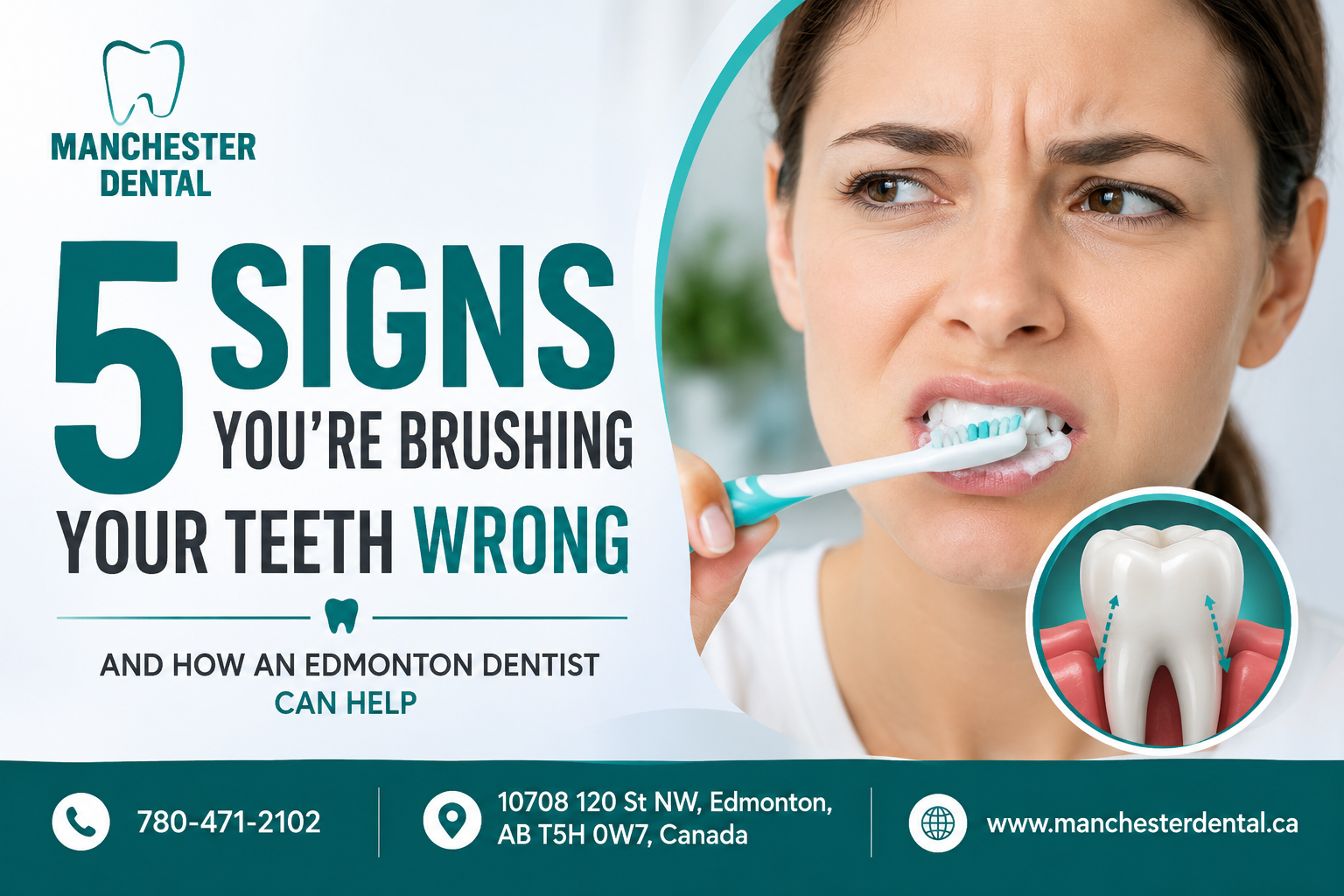
Can brushing your teeth the wrong way cause dental problems? Yes. Even if you brush twice a day, using the wrong technique may not clean your teeth properly. A dentist in Edmonton can show you the right way to brush and help you avoid problems like plaque buildup, sore gums, worn enamel, and cavities. Brushing your teeth the right way helps keep your teeth and gums healthy and can help prevent dental problems in the future.
Why Does Proper Brushing Matter?
Brushing removes plaque, food particles, and bacteria that build up throughout the day.
Good brushing habits help:
- Reduce the risk of cavities.
- Protect the gums
- Prevent bad breath
- Keep teeth looking clean.
- Support long-term oral health.
Using the right technique is just as important as brushing regularly.
Sign 1: Your Gums Bleed Every Time You Brush
Occasional bleeding may happen if flossing has been skipped, but regular bleeding is not normal.
Possible reasons include:
- Plaque buildup
- Gum irritation
- Brushing too aggressively
- Early gum disease
A dentist near you can determine the cause and recommend the right treatment.
Sign 2: Your Teeth Feel Sensitive
Sensitivity after brushing may be a sign that the teeth are being brushed too hard.
Common symptoms include:
- Pain with hot foods
- Discomfort with cold drinks
- Sensitivity while brushing
- Sharp pain near the gumline
Using a soft-bristled toothbrush and gentle pressure often helps protect the enamel.
Sign 3: Your Toothbrush Bristles Wear Out Quickly
A toothbrush should normally last about three months.
If the bristles spread out after only a few weeks, it may indicate:
- Brushing with too much pressure
- Scrubbing instead of brushing
- Using excessive force
Gentle brushing is more effective than hard scrubbing.
Sign 4: Plaque Builds Up Even After Brushing
If teeth still feel rough or look dull after brushing, plaque may not be removed properly.
Possible reasons include:
- Brushing too quickly
- Missing certain tooth surfaces
- Using incorrect brushing angles
- Not brushing for two full minutes.
A dentist in Edmonton can demonstrate proper brushing techniques during routine visits.
Sign 5: You Often Have Bad Breath
Persistent bad breath may indicate that bacteria remain on the teeth, gums, or tongue after brushing.
To help reduce bad breath:
- Brush all tooth surfaces.
- Clean the tongue daily.
- Floss every day
- Replace toothbrushes regularly
Good brushing habits work together with flossing to improve oral hygiene.
What Is the Correct Way to Brush?
Brushing your teeth the right way helps keep your teeth and gums healthy.
Helpful brushing tips:
- Use a soft toothbrush.
- Brush for two minutes.
- Hold your toothbrush at a slight angle to your gums.
- Brush gently in small circles.
- Brush your tongue after brushing your teeth.
- Get a new toothbrush every three to four months.
Brushing gently every day is better than brushing too hard.
What Other Habits Support Healthy Teeth?
Brushing alone cannot remove all plaque.
Healthy daily habits include:
- Floss once a day
- Drink water regularly
- Limit sugary snacks
- Eat a balanced diet
- Visit the dentist in Edmonton regularly.
Each habit contributes to better long-term oral health.
How Can a Dentist Help Improve Brushing Habits?
A dentist near you can evaluate oral hygiene and identify areas that need improvement.
During a routine examination, the dentist may:
- Check for plaque buildup.
- Assess gum health
- Demonstrate proper brushing techniques.
- Recommend the right toothbrush.
- Suggest products based on individual needs.
Personalized guidance often leads to better brushing habits.
When Should You Replace Your Toothbrush?
Replacing a toothbrush at the right time helps maintain effective cleaning.
A toothbrush should be replaced:
- Every three to four months
- After recovering from illness
- If bristles become frayed
- If the toothbrush shows signs of wear
Using an old toothbrush may reduce cleaning effectiveness.
Ready to Improve Your Daily Oral Care Routine?
Healthy teeth and gums start with good brushing habits and regular dental visits. Small improvements to your daily routine can help prevent cavities, protect your gums, and keep your smile healthy. Schedule a consultation with Manchester Dental for a complete dental examination, personalized brushing and oral hygiene tips, and preventive care designed to support a healthy, confident smile for years to come.
FAQs
How long should you brush your teeth?
Most dentists recommend brushing your teeth for about two minutes to clean them properly.
Is brushing harder better for cleaning your teeth?
No. Brushing with too much force can wear down your enamel and irritate your gums. Gentle brushing is just as effective at cleaning your teeth.
Should you brush your tongue?
Yes. Gently brushing your tongue helps remove bacteria and can help keep your breath fresh.
Can the wrong toothbrush damage your teeth?
Yes. A hard-bristled toothbrush or brushing with too much pressure can slowly wear away your enamel and irritate your gums.